
Pair Shopify with Gelato, Printful, or Printify to sell art prints without stocking finished goods. ArtDrop writes the listings and creates the products. Supported Gelato and Printify connections can publish to Shopify. A standalone Printful store keeps the product for you to publish later. With a Shopify-connected Printful store, ArtDrop creates a live Shopify listing. Budget for Shopify, a domain, payment fees, samples, apps, marketing, returns, taxes, and provider charges that may arrive before your Shopify payout.
Print on demand removes the need to pre-produce a stack of finished prints. The provider manufactures and ships orders, while you still own product selection, file quality, samples, pricing, support, returns policy, tax obligations, marketing, and provider cash flow. It is lower-inventory, not zero-responsibility.
Shopify hosts the storefront, domain connection, merchandising, and order records. A customer list requires lawful, permission-based capture; an order email is not automatic marketing consent. A print-on-demand provider handles production and shipping for mapped products. This guide covers provider choice, full-cost pricing, samples, catalog work, traffic, and the limits of automation.
Shopify Plus POD Versus Marketplaces
Marketplaces and owned storefronts solve different problems. A marketplace can provide discovery and checkout under its own fees, data rules, policies, and account controls. Shopify gives the merchant more storefront and direct-relationship control, while requiring the merchant to acquire traffic and manage more of the operation.
Running Shopify with a POD provider changes four areas worth evaluating.
The tradeoff is traffic and operating responsibility. Compare marketplace fees and discovery with Shopify subscription, payments, apps, acquisition, privacy, support, tax work, and provider cash flow. The math can favor either route, and many sellers use both; calculate contribution margin and workload from your own data.
Choosing a Provider for Prints
ArtDrop creates products at Gelato, Printful, and Printify. All three offer wall-art products, while quality, availability, landed cost, support, and replacement handling vary by SKU and destination. Use current quotes and representative samples; the three-way comparison supplies the framework.
Gelato aims to produce closer to the delivery destination when product availability, capacity, and routing allow. It does not guarantee that every German order prints in Germany or every Australian order in Australia. Compare current product eligibility, shipping, delivery estimates, and samples for the regions you serve.
- Local production near the buyer cuts international shipping
- Strong wall art and print catalog
- Direct Shopify integration; standard path may not require Gelato+, while production and operating costs remain
- Print partner quality can vary by country
- Smaller apparel catalog than the others
- Order samples from a few regions before going all in
Printful has a mature Design Maker, mockup, branding, and storefront workflow. It operates its own production centers and also uses partner facilities, so do not claim every order comes from an owned plant or is automatically the most consistent. It is not the only embroidery provider: Gelato documents flat embroidery and Printify advertises more than 120 embroidery-ready items.
- Own production centers plus partner facilities
- Direct Shopify integration; standard account path may avoid a paid plan, while production and operating costs remain
- Mature apparel and decoration workflow
- Can price higher on some product-and-route combinations
- Shipping and routing must be checked per destination
- Tighter margins unless you price at a premium
Printify is a marketplace of independent print providers. It lets you compare partner-specific base prices, locations, variants, and products. A lower base price does not prove the lowest landed cost after shipping, discounts, taxes, and routing. Sample the exact product and provider.
- Partner-level price and location choice
- Broad catalog through its partner network
- Standard path may avoid Premium; partner, production, shipping, sample, and operating costs remain
- Quality varies by partner, requires vetting
- Embroidery requirements and availability vary by item
- More upfront research per product type
Printful examples: These mockups show three wall-art formats. They demonstrate format and placement only, not physical sample quality, an active Shopify listing, or a universal provider ranking.

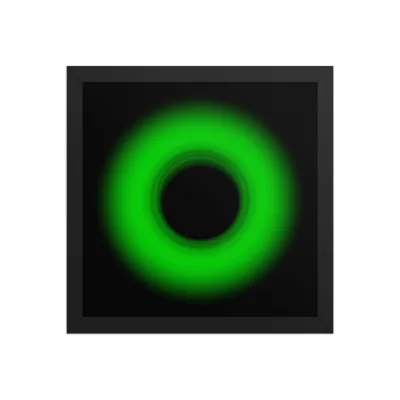
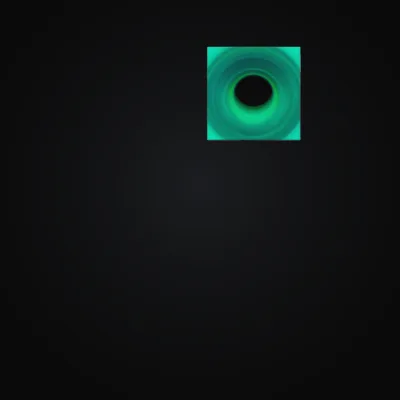
If you are comparing Gelato and Printify, use the head-to-head as a framework, then price and sample your actual products. Geography alone does not create a universal winner.
Pricing Prints So You Actually Profit
Build a contribution-margin model before publishing. The retail price must cover more than the provider base cost, and only the amount remaining after every included cost is contribution margin.
Scroll sideways to compare all columns.
| Cost | What it is | Who you pay |
|---|---|---|
| Base cost | What the provider charges to produce the print | Gelato / Printful / Printify |
| Shipping | Delivery to the customer (often passed to buyer, but it affects conversion) | The provider |
| Payment fees | Card processing on every order | Your payment processor |
| Platform plan | Your monthly Shopify plan, spread across sales | Shopify |
| Your profit | Retail price minus everything above | You keep this |
Directional only. Base costs and fees change and vary by product, provider, and region. Run the math for your own product mix.
The mistake is pricing from base cost alone. A low base price can still lose money after shipping, payment fees, returns, discounts, taxes, and acquisition. Gelato's distributed network may improve some routes, but test current quotes rather than assuming local production.
Set a minimum contribution-margin amount or percentage from your own overhead, replacement risk, acquisition cost, and income target, then stress-test shipping, discounts, returns, and fee changes. There is no universal markup that makes every print business viable. The POD software pricing guide shows how to price listing tools for your workflow.
The Real Bottleneck: One Artwork, Many Listings
Store and provider setup time varies with plans, billing, products, policies, taxes, shipping, and account state. Measure those tasks separately from repeated listing work; the Gelato connection guide shows what belongs in the setup test.
If one artwork is offered as a framed print, poster, canvas, several sizes, or through more than one provider, it creates multiple product and variant records. Each chosen route needs deliberate setup and verification before launch:
- A clear, specific title. Useful to shoppers and search systems.
- A product description. Something that captures the piece and gives a buyer a reason to click add to cart.
- Relevant tags. Accurate phrases supported by product and audience research.
- Alt text. For accessibility and for image search, on every variant.
- The product build itself. Configuring each format and size at the provider, then syncing it to Shopify.
There is no universal per-product duration. Time representative products from provider setup through Shopify verification, including fields, placement, variants, pricing, mockups, shipping, corrections, and mapping. Multiply measured hands-on time by the actual product count, then compare it with an automated test.
How ArtDrop Turns One Drop Into a Full Set
This listing grind is the entire reason ArtDrop exists. You drop one image. ArtDrop reads the artwork, the subject, the colors, the mood, the composition, and writes the listing for you, in your own voice once it has learned your style.
Start with one artwork file after connecting and configuring your own store and provider accounts. You still choose products, providers, variants, prices, and review the result.
It reads the image and writes a title, product description, SEO fields, and alt text in your trained voice. Product tags come from your saved settings and artwork metadata. Review factual, material, size, and edition claims on the finished listing.
ArtDrop creates the print formats across your connected Gelato, Printful, and Printify accounts. You own and connect those provider accounts.
Supported Gelato and Printify connections publish to Shopify. Review the finished product before promotion. ArtDrop Web can share the live product on Bluesky from Social Publishing. ArtDrop-created Shopify products can reach Pinterest through Shopify's official Pinterest sales channel. Direct organic Pin posting is not included.
ArtDrop compresses the repeated setup and drafting, but the drop is not the end of the job. Check placement, variants, price, shipping, copy, and alt text in the resulting provider and Shopify records. Your accounts stay yours, and so do production charges, samples, storefront costs, refunds, tax work, customer service, and the final judgment on every product.
ArtDrop turns artwork into products across Gelato, Printful, and Printify. Supported Gelato and Printify connections can publish to Shopify or Etsy. The Web demo includes up to 3 free drops. The web plan is $39/month; the one-time Mac app is $399. Publishing has no per-product ArtDrop fee. Copy generation is optional and separate. ArtDrop Web includes 500 managed copy credits each month and also supports your own provider key. ArtDrop Mac uses your own provider key. You can always write the copy yourself. See the Shopify automation guide.
Getting Started From Zero
If you are setting up a print store and have nothing yet, here is a sensible order of operations.
- Open your Shopify store. Pick a plan, claim a domain, choose a clean theme that puts the art first. This is your shop and your brand, so make it look like yours.
- Create a provider account. Compare current product eligibility, landed cost, routing, and samples for the products and regions you sell. Do not assign universal category winners.
- Order samples before you sell. Non-negotiable. Print a few of your key products and check color, paper, and packaging with your own eyes. Never ship quality you have not seen to a paying customer.
- Price for real margin. Base cost plus shipping plus payment fees plus your plan, then a healthy cushion on top. Do this per product type before you set a single retail price.
- Launch a coherent, tested catalog. There is no minimum product count that guarantees sales. Publish enough work to communicate the collection, and prioritize accurate products over arbitrary volume.
- Test acquisition. Use permission-based email, relevant social channels, partnerships, search fundamentals, or paid campaigns, then measure traffic, conversion, contribution margin, and repeat purchase. No channel guarantees discovery.
Print on demand can reduce finished-goods inventory, but it still carries startup and operating costs: Shopify, domain, samples, payment fees, provider charges, apps, returns, tax work, and customer acquisition. The margin is what remains after all of them. Automate listing work only after the product economics and quality hold up.
Frequently Asked Questions
Do I need inventory to sell art prints on Shopify?
No finished-goods inventory is required when you use print on demand. A connected provider produces after an order, but you still fund samples and may pay the provider before your Shopify payout arrives.
Which print provider is best for art prints?
There is no universal winner. Compare the exact substrate, size, framing, eligible region, landed cost, route, packaging, and physical sample. Gelato uses a distributed network, Printful uses owned and partner facilities, and Printify exposes independent providers.
How much does it cost to sell prints on Shopify?
Budget for Shopify, a domain, payment fees, samples, provider production and shipping, apps, marketing, returns, discounts, taxes, and cash-flow timing between provider charges and Shopify payouts. POD avoids pre-producing finished stock; it is not a no-cost or full-margin business.
How do I price art prints?
Use landed cost, not base price alone. Cover production, shipping, payment fees, storefront and app costs, expected returns, discounts, taxes, and acquisition, then leave a profit cushion appropriate to the art and product.
How do I list many prints quickly on Shopify?
Use templates and a provider-connected workflow, start with a small representative batch, and verify every output before scaling. ArtDrop writes artwork-specific fields and creates configured products across connected Gelato, Printful, and Printify accounts; you stay responsible for the final product and copy check.