
ArtDrop gives you two live ways to publish on Etsy. Digital downloads use Etsy's official Open API v3, with ArtDrop drafting the title and description while Etsy publishes the listing and delivers the file after purchase. Physical print-on-demand publishes through your Etsy-connected Printify shop or Gelato store, which creates the listing and fulfills the item. A supported Gelato or Printify connection can publish to Shopify from the same drop. Review each finished destination.
Etsy runs on two very different kinds of product, and the automation story is different for each. Digital downloads are the printable art, the wall art files, the SVGs and the templates that buyers download and print themselves. Physical print-on-demand is the framed print, the poster, the mug, the tee that a provider makes and ships. People blur those together when they ask how to automate Etsy, and then the advice they get is wrong for half of what they sell.
This guide keeps digital and physical Etsy publishing separate. I sell my own photography and have spent real hours hand-typing these listings. The two options reach Etsy differently, even though both start from the same artwork in ArtDrop.
What does it mean to automate Etsy print on demand?
Automating Etsy POD means drafting the listing fields and publishing the work to the right destination. Digital downloads go through Etsy's API. Physical items go through your Etsy-connected provider. Review the finished Etsy listing before expanding the batch.
How does ArtDrop publish print-on-demand listings to Etsy?
ArtDrop publishes digital listings through Etsy's Open API v3. This is the sanctioned programmatic path Etsy documents for creating listings, not a scraper or browser macro. ArtDrop reads the accepted image, drafts the listing fields, and ArtDrop sends the listing to Etsy. Open Etsy to confirm the finished listing and download file.
The listing copy is drafted to Etsy's field limits. Here is how the direct digital workflow comes together.
ArtDrop drafts a clear title inside Etsy's 140-character limit. Important buyer-facing words appear early so shoppers can scan the title easily, but word order does not directly affect Etsy search ranking.
Etsy gives every listing 13 tag slots and caps each tag at 20 characters. ArtDrop uses product tags from your saved settings and artwork metadata and sends them within those limits. Review the resulting tag set before expanding a batch.
The description is written to match the trained voice for that store, so it reads like you wrote it, not like a template. Buyers get what the file is, how to use it, and what they are getting.
When Etsy accepts and publishes the digital-download listing, Etsy handles fulfillment. After the buyer pays, Etsy delivers the file automatically. Confirm the listing state and attached file in Etsy before treating the result as complete.
All of that runs in a supported modern browser. The Live Log opens when an upload starts so you can follow each store. Routine drops work on a phone, iPad, or laptop with nothing to install. A supported Gelato or Printify connection can publish to Shopify from the same drop.
Can ArtDrop create physical print-on-demand products on Etsy?
Yes. ArtDrop publishes through your Etsy-connected Printify shop or Gelato store. The provider creates the physical Etsy listing and owns fulfillment. Direct Etsy API publishing is for digital downloads.
Connect Etsy inside Printify or Gelato, then select that shop or store in ArtDrop. Your physical products go to that provider, which creates the Etsy listings and handles fulfillment.
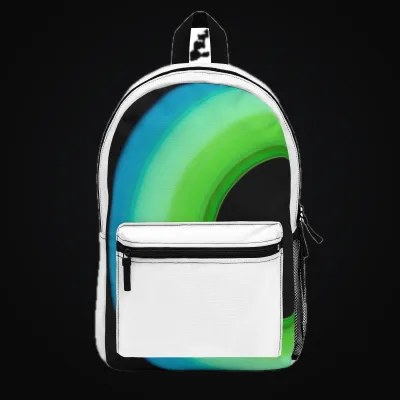
This Printify backpack shows one physical product format. Your finished Etsy listing comes from the Printify shop or Gelato store you connected.
Digital on Etsy = ArtDrop direct via Open API v3. Physical on Etsy = ArtDrop through the Etsy-connected Printify shop or Gelato store. The provider creates the physical Etsy listing and fulfills it.
How much time does the manual Etsy listing tax really cost?
A single Etsy listing needs a clear title, a full description, up to 13 considered tags, the right assets, and a review. The time varies by seller, assets, listing type, and review. Time one representative listing in your own workflow before projecting the effort for a larger catalog.
Automation removes repeated drafting and store setup. You still review the finished listing. Here is the shape of the trade.
Scroll sideways to compare all columns.
| Per Etsy listing | By hand | With ArtDrop |
|---|---|---|
| Title (140 char max) | You write and rewrite it | ArtDrop drafts it for buyer scanability |
| 13 tags (20 char each) | You brainstorm 13 slots | Up to 13 drafted within the limit |
| Description | You type it, or skip it | Drafted with your trained voice context |
| Time per listing | Varies by seller, assets, and review | Varies by artwork and store review |
| Can also target Shopify | No, copy-paste it again | Through a supported Gelato or Printify connection |
Directional. Actual hand-listing time depends on how carefully you research tags, but the per-listing labor is the reason catalogs stay small.
Can I publish to Etsy and Shopify from the same drop?
Yes. One ArtDrop drop can publish to Etsy and, through a supported Gelato or Printify connection, Shopify. Each store gets its own copy and result. Check both store results.
If you have ever run both a marketplace and your own store, you know the tax there too: write the listing on Etsy, then copy, paste, and rework it for Shopify. Publishing to both stores from one drop removes that duplication. Your Shopify store gives you a direct home for the brand, while Etsy brings its marketplace audience.
Drop an artwork and ArtDrop reads the image, then drafts the title and description in your trained voice. Digital downloads publish to Etsy through Open API v3. Physical Etsy products publish through your connected Printify shop or Gelato store. A supported Gelato or Printify connection can publish to Shopify from the same drop. Review each finished store result.
Do I still own my catalog and my Etsy shop?
Yes. Your Etsy account, Shopify store, provider accounts, and catalog stay under your control. ArtDrop writes and publishes into the accounts you own.
That ownership matters more than it sounds. Marketplaces set the terms and can change them, so keeping your own copy of every title, tag, and description means a policy change or an account issue never wipes out the work. Automation should make you faster without making you dependent, and keeping your catalog yours is how that stays true.
Put the pieces together and the setup is simple. Connect Etsy directly to ArtDrop for digital listings. For physical Etsy products, connect Etsy inside Printify or Gelato and select that shop or store in ArtDrop. Add a supported Gelato or Printify Shopify connection if you want the same drop to reach your own store.
- Digital downloads, straight to Etsy. ArtDrop sends the digital-download listing through Open API v3 and ArtDrop drafts the title and description. Product tags come from your saved settings and artwork metadata and are sent within Etsy's limits. When Etsy publishes the result, Etsy auto-delivers the file to the buyer. Inspect the listing before expanding the batch.
- Physical POD, through your provider. Select the Etsy-connected Printify shop or Gelato store in ArtDrop. That provider creates the Etsy listing and handles fulfillment.
- Your own store, in parallel. The same drop can publish to Shopify through a supported Gelato or Printify connection. Review the Shopify result alongside Etsy.
That is the 2026 answer to Etsy print-on-demand automation: digital listings publish directly, while physical listings publish through your Etsy-connected Printify shop or Gelato store. The Web demo includes up to 3 free drops so you can test the workflow before you pay. After that, the web app is $39/mo.
Etsy POD automation: common questions
How do you automate Etsy print on demand?
ArtDrop has two live Etsy options. Digital-download listings publish directly through Etsy's official Open API v3. Physical print-on-demand products publish through the Etsy-connected Printify shop or Gelato store you select, and that provider creates and fulfills the Etsy listing.
Can ArtDrop create physical print-on-demand products on Etsy?
Yes. Select your Etsy-connected Printify shop or Gelato store in ArtDrop. That provider creates the physical Etsy listing and fulfills the item.
Is it allowed to automate Etsy listings with an API?
Yes. Etsy's Open API v3 officially supports programmatic listing creation. ArtDrop uses that API to publish the listing and download. Confirm that the finished Etsy listing includes the file.
How does ArtDrop prepare Etsy titles and tags?
ArtDrop reads your artwork and drafts a clear title inside Etsy's 140-character limit plus a full description in your trained voice. Important buyer-facing words can appear early for scanability, but word order does not directly affect Etsy search ranking. Product tags come from your saved settings and artwork metadata and are sent within Etsy's limits.
Can I publish to Etsy and Shopify at the same time?
Yes. A single drop can publish directly to Etsy and, through a supported Gelato or Printify connection, Shopify. Each store gets its own copy and result.
Do I still own my catalog if ArtDrop publishes my listings?
Yes. The listings live in your Etsy account, Shopify store, and provider accounts. Those accounts remain the home of the products ArtDrop creates.